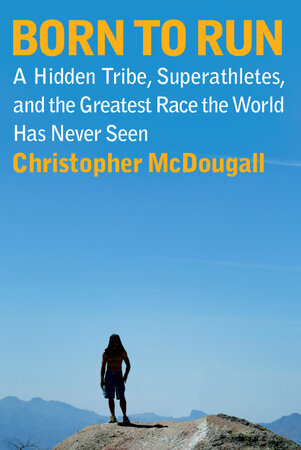
A recurring running injury sends Christopher McDougall looking for people who can cover extraordinary distances on foot. In Mexico’s Copper Canyons, he meets Rarámuri runners and follows the preparations for a race that brings them together with American ultrarunners. The story of the race carries a wider inquiry into endurance, running shoes and the pleasure people find in running together.
Exercise & Physicality
Training, movement, and body optimization for functional longevity.
People
(38)Bryan Johnson
Entrepreneur & Biohacker
Bryan Johnson founded the payments company Braintree and later Kernel, a company that develops tools for measuring brain activity. With Blueprint, he turned the focus of measurement on himself: he records what he eats, how he sleeps and trains, and how his test results change over time.
Peter Attia
MD, Longevity Expert
Peter Attia is a physician and co-author of Outlive. His work covers exercise, preventive medicine and aging.

Wim Hof
The Iceman
Wim Hof is a Dutch endurance athlete whose public demonstrations earned him the nickname the Iceman. He drew attention by swimming under ice and spending long periods surrounded by ice. What began as a personal fascination became a question other people could test: how much of his response to cold could someone else learn?
Aubrey Marcus
Author
Aubrey Marcus founded the fitness company Onnit and hosts long-form conversations on the Aubrey Marcus Podcast. His book Own the Day, Own Your Life is structured around a single day, following a reader from waking through meals, work, training and bedtime. It gives his ideas about performance a concrete setting: the ordinary decisions that recur tomorrow.
Ben Greenfield
Author
Ben Greenfield is a fitness writer and endurance athlete who writes about training and recovery.
Brad Stulberg
Author
Brad Stulberg writes about sustaining demanding work over time. He and running coach Steve Magness co-wrote Peak Performance, drawing parallels between athletic training and creative work, particularly the role of recovery between hard efforts. In Master of Change, Stulberg takes up a related question: how to keep a sense of direction when familiar routines fall apart.
Books
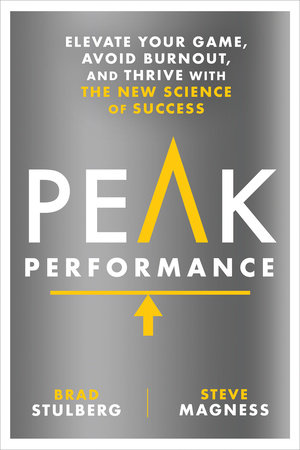
(31)Brad Stulberg and Steve Magness look for common features of sustained performance in athletics, creative work and other demanding fields. They use training and recovery to explain why periods of concentration need periods of rest. Interviews and research examples also examine purpose, routine and the conditions under which effort turns into burnout.

David A. Sinclair, writing with Matthew D. LaPlante, asks whether aging can be understood as a loss of cellular information. Experiments in yeast and mice provide the starting point for his argument about gene regulation and aging. Later chapters consider what a longer healthy lifespan might mean for families, institutions and medicine.
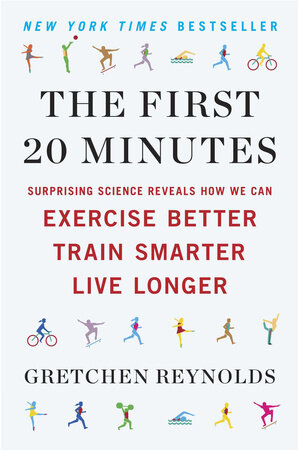
Gretchen Reynolds brings a reporter’s questions to exercise research: how much activity makes a difference, what happens when people sit for most of the day, and which training habits have survived better tests? She moves between experiments and practical dilemmas about stretching, recovery and endurance. The title points to one of her interests throughout the book, the difference between getting started and training for a competitive goal.
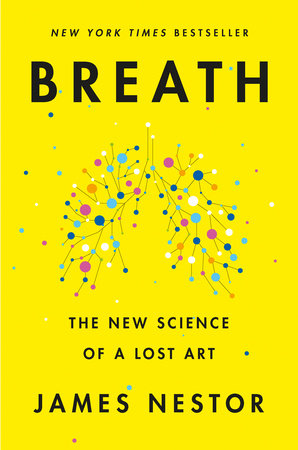
Journalist James Nestor asks what changed when humans changed the way they breathe. He reports on nasal breathing, visits researchers and practitioners, and describes taking part in an experiment comparing mouth and nose breathing. Historical accounts of breath training give context to the measurements and personal experiences he reports.
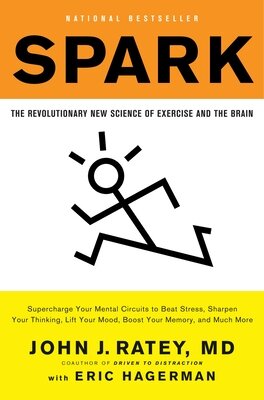
John Ratey and Eric Hagerman begin in a school district outside Chicago, where an unusual physical education program gives them a way to ask how movement affects learning. They follow that question into research on attention, stress and mood. Classroom reporting, clinical stories and explanations of changes in the brain give the book three different ways to examine what happens during and after exercise.
Protocols
(9)
FeaturedDaily Walking Baseline
The aerobic floor. Free, joint-friendly, and hard to argue with.
Physical activity guidelines
- 1 habit
- Ongoing, 30-45 min/day
- Free
Featured- 4 habits
- Ongoing, 4-6 mini-sets/day
- ~$30 one-off

Daily Dead Hangs
Thirty seconds on a bar. Grip strength predicts more than it has any right to.
Physical activity guidelines
- 1 habit
- Ongoing, 60-90 sec/day
- ~$30 one-off

Kettlebell Swing Practice
One movement, ten minutes, most of the hinge pattern you'll ever need.
Pavel Tsatsouline
- 1 habit
- Ongoing, 10 min, 4-5×/week
- ~$80 one-off

Resistance Training Basics
Two full-body sessions a week, where strength and bone density actually move.
Physical activity guidelines
- 1 habit
- Ongoing, 2×45 min/week
- ~$250 one-off + ~$40/mo

- 1 habit
- Ongoing, 45-60 min, 1-2×/week
- ~$40 one-off
Articles
(16)
NK Cells Are Becoming the Body’s Most Hackable Cancer Weapon
# NK Cells: The Ultimate Biohack for Unleashing Your Immune System Against Cancer Your body is already equipped with elite assassins designed to hunt and destroy cancer cells: **Natural Killer (NK) c...

Zone 2 Training: Building Metabolic Flexibility
At an easy aerobic pace the body uses a mixture of fuels.

Movement Variability: Why Gym Bros Need Yoga
A gym program can repeat the same movement paths for months.

Strength Training for Longevity: Beyond Aesthetics
Strength matters for independence because everyday tasks demand a margin between the force available and the force required.

Zone 2 Training: The Foundation of Metabolic Health
Zone labels differ between three-zone and five-zone systems.

Functional Movement Screening
A movement screen breaks a complex task into repeatable observations.
Tracking HRV for Recovery and Readiness
A readiness score may combine heart rate variability with sleep, resting heart rate or recent activity.

Testosterone Optimization Naturally
Testosterone varies with time of day and health status.

Dynamic Stretching vs Static Stretching
Dynamic stretching moves a joint repeatedly through a comfortable range.

Lactate Threshold Training for Endurance
As exercise intensity rises, the rate at which lactate enters and leaves the bloodstream changes.

High-Intensity Interval Training: The Science of Time-Efficient Fitness
Interval training alternates demanding work with recovery.

Mobility Work for Longevity: The Daily 15-Minute Protocol
Mobility combines range of motion with control.

Fascia and Movement Quality
Fascia is connective tissue that surrounds and links structures throughout the body.

Compound Lifts for Muscle and Metabolic Health
Compound lifts involve several joints in one movement.

Strength Training for Longevity and Metabolic Health
Resistance training asks muscles to produce force against a load.

Zone 2 Training: The Metabolic Health Foundation
A useful easy workout is one you can repeat.
Explore Other Pillars
Liberture is built on 6 interconnected pillars of human optimization